


 Listen Live

CHARLOTTESVILLE, VA (CVILLE RIGHT NOW) – In her first address to a joint session of the General Assembly, Gov. Abigail Spanberger said she would get Virginia back in the Regional Greenhouse Gas Initiative, or RGGI. What would that mean for the Albemarle County and Charlottesville area?
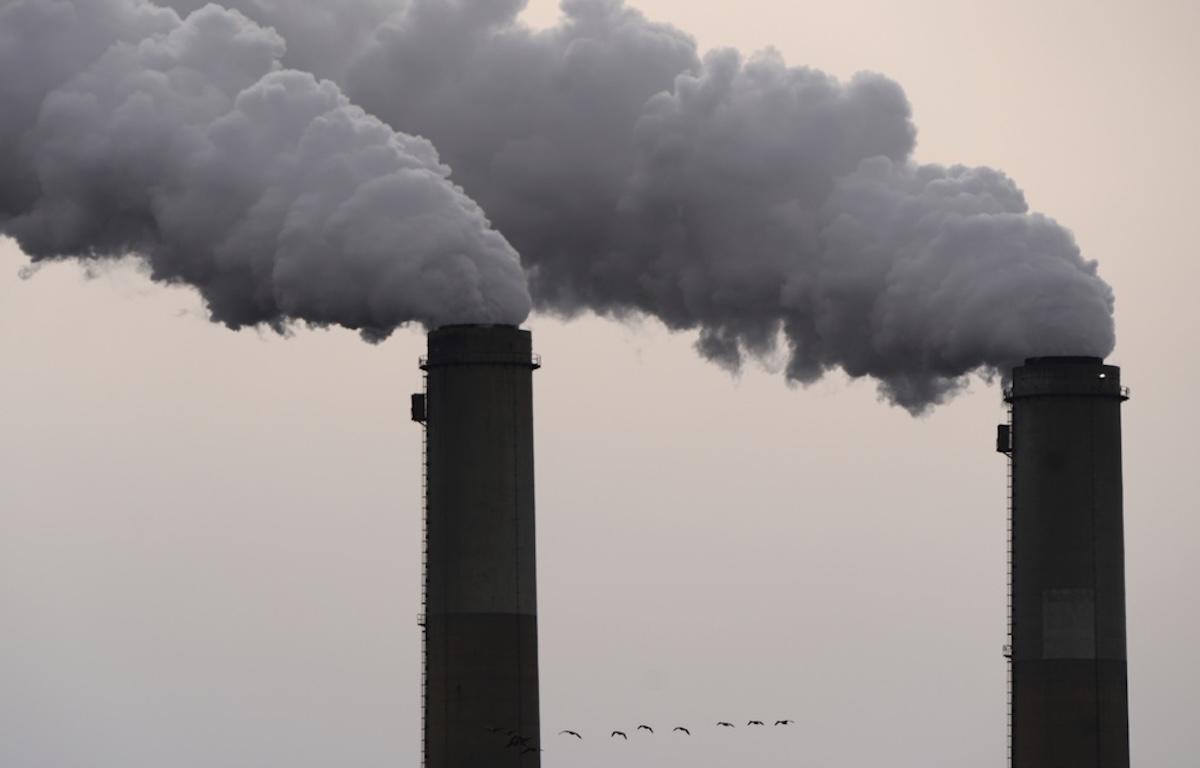
Through the 10-state RGGI marketplace, companies like Dominion and Appalachian Power buy credits for each ton of carbon emissions they produce, essentially a tax on pollution. The money is then used to fund infrastructure projects in localities and to help low-income families make their homes more energy efficient.
“For me, this is about cost savings. RGGI generated hundreds of millions of dollars for Virginia — dollars that went directly to flood mitigation, energy efficiency programs, and lowering bills for families who need help most,” Spanberger told the General Assembly on Jan. 19. “Withdrawing from RGGI did not lower energy costs. In fact, the opposite happened — it just took money out of Virginia’s pocket. It is time to fix that mistake.”
Virginia joined RGGI in 2020 under former Gov. Ralph Northam, a Democrat. His successor, Republican Gov. Glenn Youngkin, pulled Virginia out in 2023, a move that courts deemed unlawful because he did so without involving the General Assembly.
Opponents contend that companies just pass the cost of the credits onto the customers, raising their energy bills, and that it doesn’t really incentivize facilities being more environmentally conscious.
The Virginia Manufacturers Association has been one of the most consistent and persistent RGGI opponents, suing to attempt to block Virginia from joining in 2020 and supporting Gov. Youngkin’s decision to pull out in 2023. A VMA spokesperson did not respond to a request for comment.
But in the three-plus years that Virginia was part of RGGI, from 2020-2023, Virginia received over $820 million for local projects and improvements, while the average customer only saw a rise of about $2.39 a month in their bills in 2021, that number went up to $4.44 in recent years.
The Virginia Beach area received about $3 million for flood plain restoration. Dickenson County, in southwest Virginia, received $2.2 million for flood proofing and restoration.
Locally, Albemarle County received $118,313 in 2022 for a floodplain resilience plan and staffing in 2021, Scottsville got $123,346 for a flood prevention and protection study that year and, in the most recent round of grants, Greene County was awarded $93,750 for a countywide resilience plan, according to data on the Virginia Department of Conservation and Recreation website.
Sen. Creigh Deeds said he supports the Governor’s plan to rejoin RGGI, telling Cville Right Now, “It’s a cost saver for Virginia,” and that the “benefits far outweigh the cost.”
The City of Charlottesville has been one of the area’s biggest beneficiaries of RGGI dollars, according to the DCR.
In all, the city has received $882,776 from RGGI for four projects from 2021-23.
In 2021, it got $153,500 for the Moores Creek Watershed, and another $94,276 for resilience planning and staff training. In 2022, it received $275,000 for a dimensional stormwater management model for Meadow Creek and Rivanna River watershed. And in 2023, it was awarded $360,000 for a third-party audit of the city’s floodplain management program and an update to its resilience plan.
Charlottesville City manager Sam Sanders told Cville Right Now the city is eager to take advantage of the funds RGGI can provide.
“Absolutely,” Sanders said. “We have submitted support letters throughout the young administration in support of getting back into RGGI and we are excited that she is going to make that happen.”
UVA law professor Cale Jaffe, the director of the environment law and community engagement clinic, said at RGGI’s beginning, it was a bipartisan effort. Seven states, all in the northeast, initially signed on – four with democratic governors and three with Republicans.
“The market based nature of RGGI reflects that it was originally a bipartisan idea,” Jaffe told Cville Right Now. “Going back 20 years, the conservative approach to climate was to really leverage market forces to let the market find the most efficient ways to reduce carbon pollution.”
In 2020, Virginia’s General Assembly passed two key environmental statutes — the Virginia Clean Economy Act and the Clean Energy and Community Flood Preparedness Act. The latter included RGGI.
“The revenue from that, by the statute, would flow back to Virginia into, two funds,” Jaffe said, noting that about half the RGGI funds go to low-income families for home improvement projects that make their houses more energy efficient.
The second part of the money went to local government infrastructure projects, like the ones Albemarle and Charlottesville have undertaken.
“There were really projects all over the Commonwealth in red communities, blue communities, aimed at these two pieces,” Jaffe said. “Making energy, more affordable for low-income families, and then helping communities have more affordable access to sort of bread and butter infrastructure projects that they would want take on.”
Jaffe said returning to RGGI doesn’t have to mean a return of costs being passed on to consumers.
“I don’t think it’s as linear as that,” he said. “If a utility plans prudently for low-carbon investments, then that’s an important way to keep energy bills under control. And of course, another thing that can be super helpful is, the more you invest in energy efficiency programs, energy efficiency is often counted as the lowest cost per kilowatt option on the table. The cheapest kilowatt to generate is the one you never have to consume in the first place.”
Unfortunately for Spanberger, rejoining RGGI isn’t a clear-cut process. While a judge ruled former Gov. Youngkin’s exit from RGGI was unlawful, and a subsequent ruling ordered Virginia to re-enter the program, Youngkin’s administration appealed those rulings prior to the end of his term.
Now, Del. Charniele Herring has proposed a bill in the House of Delegates that would allow Virginia to rejoin RGGI, while new attorney general Jay Jones is working to end the Youngkin appeals.