


 Listen Live
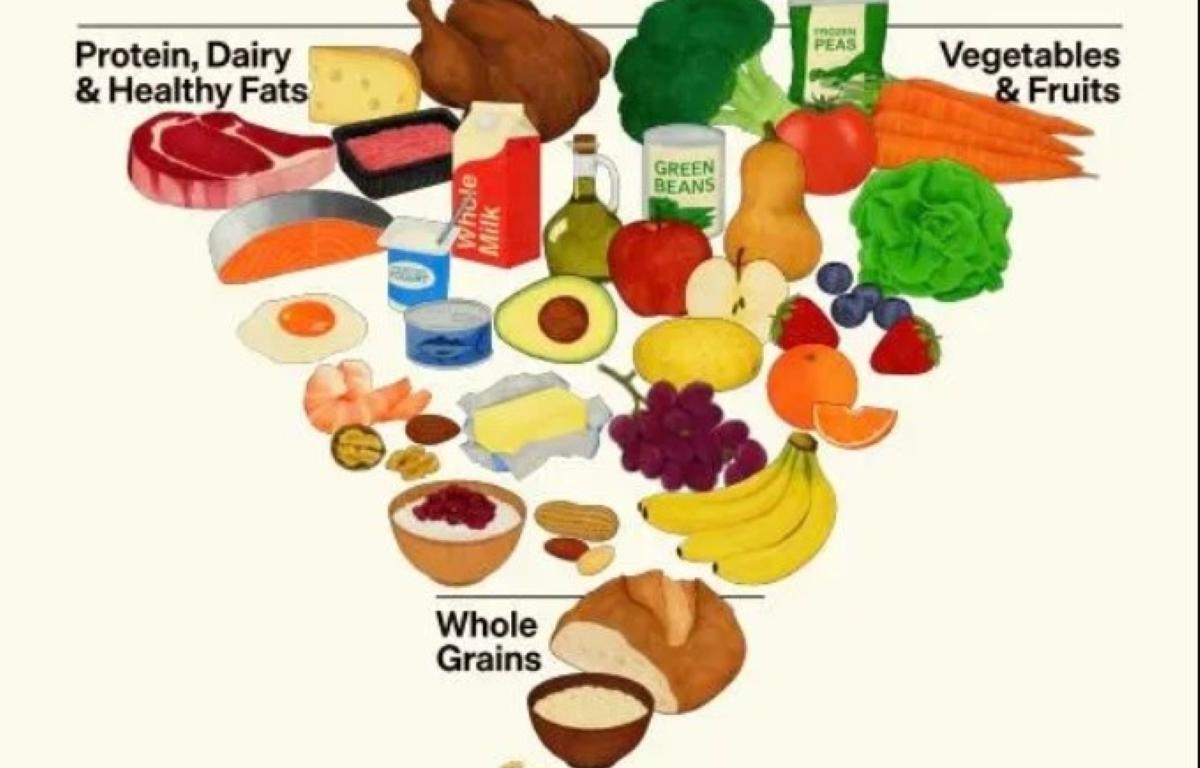

CHARLOTTESVILLE, VA (CVILLE RIGHT NOW) – The newest dietary guidelines, released this week by the Department of Health and secretary Robert F. Kennedy Jr., bring back the food pyramid, but flips it on its head to emphasize whole foods and protein and urge a reduction in Americans consumption of highly-processed foods.
And while the guidelines’ embrace of saturated fats concerns many medical professionals, overall, the new pyramid has a lot in it experts can support.
“There are some things that I think the U.S. dietary guidelines probably got right,” UVA registered dietician Mary Lou Perry told Cville Right Now. “There is an emphasis on fruits and vegetables. If you look at nutrition data, from most Americans, only 10% are meeting the vegetable consumption recommendation, 12% are meeting the fruit recommendation. So, a majority of Americans are not consuming enough fruits and vegetables. I do think there are some things that they got right, and the emphasis on food first or using real food and also calling out ultra-processed food. Those were some of the things that they got right.”
Unlike Kennedy’s widely condemned rollbacks on vaccine recommendations, medical and scientific experts support much of what is included in the new dietary guidelines. What doesn’t sit well with experts is Kennedy’s statement that the guidelines are a part of “ending the war on saturated fats,” and the removal of daily limits on alcohol consumption.
The question is, how will the new guidelines impact the average American?
“What do we do with that information?” Perry said. “I think we continue to eat with common sense. Plant proteins are important, and that’s where you can get a lot of your good protein, fruits and vegetables. Beans and legumes are good sources of protein. Lentils, for example, have 20 grams of protein in a serving, and 15 grams of dietary fiber, versus a 4-ounce steak that’s 33 grams of protein and 0 grams of dietary fiber. So, we have to look beneath the hood, if you will, and use our own common sense.”
In 1992, the U.S. Department of Agriculture began promoting the food pyramid, a triangle – narrowest at the top – that showed people what to eat the most of (grains) and what to eat the least of (oils and fats).
In 2011, an initiative by former First Lady Michelle Obama, replaced the food pyramid with a visual of a plate, a simpler image that used a pie chart to show the proper breakdown of vegetables, fruits, grains, protein and dairy in a balanced diet.
Now, under Trump and Kennedy, the pyramid is back, but inverted, with the point down. Atop the wide part of the triangle, on equal footing, are protein, dairy and healthy fats and vegetables and fruits.
“The primary element to focus on is really the recommendations to limit highly processed foods and limit added sugars,” Maria Bowman, Director of Health Initiatives for the Blue Ridge Area Food Bank, told Cville Right Now. “I do think those will have an impact on Americans, largely through the federally-funded nutrition programs, such as school lunch and after school snack programs.”
For the food bank and its 400 partners, emphasizing protein and produce can present challenges, particularly when it comes to delivery and refrigeration. But Bowman said the organization is well positioned to follow the new guidelines. In fact, she said, BRAFB has been ahead of the curve on the shifts.
“We really follow the nutrition research and what we have seen in nutrition research, especially over the last five or 10 years, really is mostly in line with the updated dietary recommendations for Americans,” Bowman said. “We continue to prioritize fresh produce, whole grains and minimally processed foods, as well as proteins, and that’s really what the updated guidelines are suggesting.”
Of course, Bowman and Perry both noted the guidelines are general in nature, aiming to offer dietary advice to the average American. Both emphasized that every individual should consider their specific health situation as they plan their diet.
“You always want to check with your healthcare provider, because remember, these are dietary guidelines for Americans, but not all Americans are the same,” Perry said. “There are some with cardiovascular disease risks, some with diabetes, and so, I think you always want to connect with a healthcare provider.”